
29 October 2026
Dr Tom Mules divides his time between the Malaghan Institute, where he heads the Mules Laboratory, and Hutt Hospital, where he is head of gastroenterology and endoscopy. As both a scientist and gastroenterologist, he bridges the gap between fundamental research into gut conditions and the patients who live with them. His focus is on understanding the far-reaching role of inflammation in the gut and how it drives the inflammatory bowel diseases (IBDs) Crohn’s disease and ulcerative colitis.
“Inflammatory disease is when your immune system has become over responsive to a particular stimuli, or a particular thing in the environment,” says Tom. “This can happen in any number of places in the body, but the gut is my particular interest.”
We don’t often associate the gut as interacting with the environment. Yet that’s exactly what our gut does, through the food and drink we consume along with the many microorganisms that hitch a ride.
Like the skin, the gut has an important role in determining what is safe and what is harmful, what to keep out, and what to allow safe passage through. As such, it’s home to a large proportion of our immune system, whose role is to protect us from millions of potential threats like bacteria, fungi, parasites and viruses. For those living with inflammatory bowel disease, something in their gut is sending the immune system into overdrive.
“We often don't know what triggers the ongoing inflammation in people with inflammatory bowel disease. However, people with IBD have differences in their gut immune system and gut lining that make them more vulnerable to these triggers, which can damage the gut.”
Inflammation and a ‘leaky’ gut
Inflammation is a double-edged sword. It’s like an alarm, putting affected tissues on high alert, recruiting ‘killer’ immune cells to help clear out harmful material and repair any damage. Without inflammation, we’d be vulnerable to any invader looking to make our warm bodies home.
But that alarm, when turned on for too long, can become chronic – the very thing that drives inflammatory disease.
“Chronic inflammation can arise from a number of sources,” says Tom. “One such instance is when substances that should stay inside the gut – like bacteria or bacteria particles – start to migrate through the gut lining and into the body.”
Clinical work keeps my questions grounded in what matters to patients, and research lets me answer them at a scale I can’t reach one consultation at a time. It keeps me focused on problems that genuinely affect patients’ lives or that doctors find hard to manage.
The cells lining the gut act as a wall, a physical barrier that separates the inside from out. Yet this wall also needs to be permeable, otherwise we wouldn’t be able to absorb the nutrients from our food. Highly specialised cells that make up the gut lining selectively allow the nutrients that fuel your body to pass through, while keeping the harmful substances out. If the wrong thing does manage to sneak through, the immune system is usually there to quickly mop it up.
Yet the gut is only as good as the integrity of its barrier. If the barrier is weakened – or ‘leaky’ – then excessive amounts of unwanted substances can get through and the immune system goes into overdrive to deal with it – leading to inflammation. If this continues, over time this inflammation starts to damage neighbouring healthy cells, further weakening the gut barrier, causing more inflammation – a cycle that can drive disease.
“As the barrier weakens, more unwanted substances can pass through the gut lining, triggering inflammation in the intestine and sometimes elsewhere in the body.”
The leakiness of the gut is influenced by a number of factors. Genetics play a role – but so too does the environment. Everyday things that we’re exposed to may also weaken the gut lining without us even realising it.
“Inflammatory bowel diseases have risen dramatically in the last 30 to 50 years all over the world, coinciding with what we refer to as ‘modern’ lifestyles.”
Tom says the modern lifestyle has introduced a whole new swathe of environmental triggers that didn’t exist 100 years ago.
“Things like detergents, antibiotics, air pollutants, emulsifiers, preservatives all seem to affect our intestinal barrier, making it more leaky, which may predispose certain individuals to inflammatory bowel disease.
“This matters because a huge number of people in New Zealand and around the world live with these inflammatory diseases.”
Tom sees this rise of inflammatory bowel disease first-hand in his clinical role.
“By 2035, it's predicted that almost 1 per cent of New Zealanders could be living with inflammatory bowel disease. That’s around every 1 in 100 people, making it a growing health challenge facing Kiwis.”
Tom and his team believe they can help prevent this coming wave by strengthening the gut barrier.
Building better barriers
“If we can find ways to strengthen the gut lining, we may be able to treat and even prevent diseases not only in the gut, but also in other parts of the body,” says Tom.
One approach to strengthen the gut barrier is to keep the cells lining the gut fit and healthy. The easiest and most effective way to do this is to ensure they have access to the right resources. The stronger these cells are, the better they can perform their role keeping the harmful material out, which in turn reduces disease-causing inflammation.
One of the main fuel sources for these intestinal cells comes from bacteria. Short-chain fatty acids are a group of molecules produced when certain kinds of bacteria living in the gut metabolise, or break down, plant fibre. Our human cells can’t do this, so we’re totally reliant on these bacteria to meet this essential need.
Many people do not produce enough short-chain fatty acids to keep these cells healthy. By improving the balance of gut bacteria or increasing short-chain fatty acid levels, we could strengthen the gut lining and improve its ability to act as a protective barrier.
“We see a strong link between a high fibre diet and levels of short-chain fatty acids, particularly butyrate, and a healthy intestinal barrier.”
Tom and his team want to take this principle and apply it to not only treating but also preventing inflammatory disease.
“We're focusing in on these bacterial metabolites because they are consistently shown to help strengthen the intestinal barrier and reduce inflammation.”
“We want to target disease at an early stage to prevent chronic inflammation and complications from developing. Whether that’s by giving patients these metabolites directly or via some other means is something we’re investigating.”
Bridging the gap between lab and patients
As both a researcher working in the laboratory and a doctor treating patients, Tom has always had his eyes towards the bigger picture of health and disease.
“Clinical work keeps my questions grounded in what matters to patients, and research lets me answer them at a scale I can’t reach one consultation at a time. It keeps me focused on problems that genuinely affect patients’ lives or that doctors find hard to manage,” he says
“Going the other way, research has shown me just how complex the gut and immune system are, and that’s made me more upfront about what we don’t know. If the evidence isn’t clear, I’m comfortable telling patients that and working out the best option together.”
This seed of embracing both clinical work and research was planted early in his career.
“I’ve always enjoyed biology, but my student summer job as an orderly at Middlemore Hospital showed me what I find most exciting and rewarding is seeing science applied to a real person’s problem.
“I saw the science at work, but I also spent time talking with patients while I moved them around the hospital. It made me realise the right answer doesn’t depend only on the science, but on a person’s history and what matters to them. I kept wanting to understand the whole picture: why a patient was being sent for a particular scan, and what else was going on in their life. Medicine appeals to me because it combines science, people and a lifelong challenge.
Tom studied medicine at the University of Otago. After two years working as a junior doctor and gaining experience across several specialties, he discovered his passion for physician medicine and eventually specialised in gastroenterology.
“During my training I was supervised by clinician researchers who approached medicine in a way that inspired me. Rather than accepting that something was standard practice, they’d ask why, and whether there was evidence for it. I found this made being a doctor more interesting and rewarding.”
It was this desire to not just apply medical knowledge but to contribute to it that drew Tom to the Malaghan Institute.
“That’s what led me to start a PhD and, ultimately, my own research group at the Malaghan. I believe understanding what drives disease is where we can make the biggest impact, so the institute’s focus on translational immunology appealed to me. So did the way it recognises the role clinician researchers play in turning discoveries into better patient care.”
Support our life-saving research.
Donate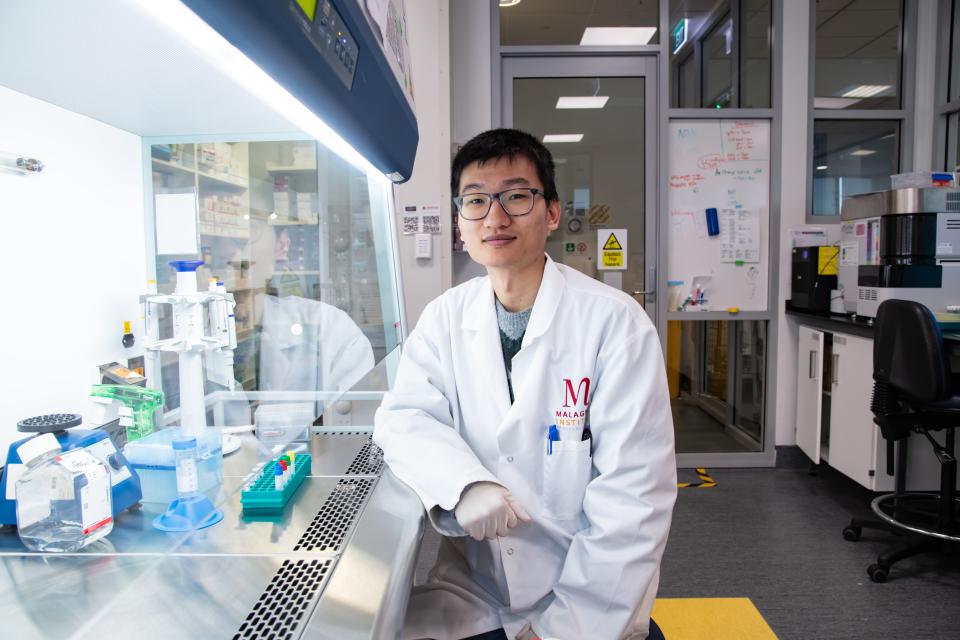
Related articles

Clinical study to uncover the origins of a severe type of Crohn’s disease
26 August 2026

Malaghan Institute to collaborate with IARC/WHO to reduce global burden of stomach cancer
24 July 2026

The changing face of allergy treatment
24 June 2026

Dr Kerry Hilligan awarded Sir Charles Hercus Health Research Fellowship
2 December 2025

Marsden funding to drive discovery and innovation in cancer, allergy and infectious disease research
5 November 2025

Research sheds new light on the allergic response – and how to disrupt it
5 June 2025