
The Malaghan Institute is committed to the internationally recognised 3Rs principles: replacement, reduction and refinement.
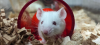
The 3Rs provide a framework for ensuring animals are used in research only when necessary, that the minimum number of animals required to achieve scientifically meaningful results are used, and that procedures are designed to minimise any potential impact on animal welfare. These principles are considered as part of the animal ethics process and throughout the animal's lifetime.
Replacement
Researchers must consider whether their scientific questions can be answered using models that do not require live animals. Depending on the research question, alternatives may include cell culture, computer simulations, mathematical modelling and other non-animal approaches.
Reduction
Reduction means using the fewest animals necessary to obtain valid and meaningful scientific results.
When animal models are required, researchers must carefully consider how many are needed to answer their research question. Appropriate experimental design and statistical methods are used to ensure that studies have sufficient animals to produce results without using more animals than is necessary.
Researchers may use small pilot studies when developing new approaches to ensure their experiments will yield meaningful results.
At the Malaghan, we use training models to reduce the need for animals during researcher trainings. For example, plastic models are used for practicing intravenous injections and suturing techniques. Sharing of tissues between research programmes also helps to reduce animal use.
Refinement
Refinement means minimising potential suffering and stress and improving welfare through the way animals are housed, handled and cared for. Our goal is to ensure each animal experiences the best life possible, not only because this supports more reliable scientific outcomes, but because it is our ethical responsibility.
Our animal care team monitors our animals closely and works with researchers and veterinary professionals to identify and respond to any changes in animal health and welfare. We enrich our animals’ environments and house them in ways that reduce stress and give them opportunities to explore, nest and socialise.
We have implemented refined handling techniques that reduce stress and promote more positive interactions between animals and the people caring for them.