
22 July 2026
Immunotherapies have transformed outcomes for many patients, training the immune system to recognise and attack tumours more precisely. But these therapies don’t work for everyone, and right now, there’s often no way to know in advance who will respond. For patients dealing with a serious illness, that can be time and hope wasted on a treatment, with none of the payoff.
"The fact that we even call all of these diseases cancer is kind of ridiculous," says Kate Nicholls, a PhD student in the Hermans Laboratory who has spent the last few years immersed in cancer research.
What she means is that no two tumours are truly alike, and treatment should reflect that. Liver cancer and blood cancer, for instance, fall under the same umbrella term, ‘cancer’, she points out, yet they behave completely differently. Even two patients with the same diagnosis can have tumours that are completely different: different causes, different biology, different outcomes. Every tumour carries its own fingerprint, and that variation is a big part of why immunotherapies can be unpredictable. Making sense of it sits at the centre of Kate's PhD.
For Kate, the goal isn't just understanding cancer, it's making sure the right patients get the right treatment.
"That way, we're not putting people through treatment that won’t help them," she says.
That's the real-world stake underlying her work: a future where clinicians can analyse whether a patient's tumour will respond to immunotherapy, and adjust treatment accordingly.
Her research centres on a specific piece of biology: a protein called p53, which normally helps protect cells from becoming cancerous. Cells can produce different altered versions of this protein, known as isoforms, and Kate is focused on one in particular. Depending on how much of this isoform a tumour contains, changes how the immune system interacts with that tumour, sometimes for better, sometimes for worse. Kate's job is to figure out whether measuring this could act as a warning sign, or ‘biomarker’, that tells doctors in advance whether a given tumour is likely to respond well to immunotherapies.
Every day I have a tumour in front of me and I'm constantly aware of how important it is.
To study this, she's designed preclinical models, so the tumours produce high levels of these p53 isoforms, allowing her to track how a tumour's relationship with the immune system shifts and whether that shift predicts how well treatment works.
She’s also developing a way to map out the tumour landscape in detail, using a technique called flow cytometry to detect the different immune cells infiltrating a tumour and what they're doing there. It's a project she's still building, and one she took on with no prior experience in the technique, learning as she went. She credits much of that learning curve to the Malaghan’s Hugh Green Technology Centre whose in-house experts and training have given her the grounding to take on a project of this scale. She says she wouldn't have gotten this far without their support.
"Every day I have a tumour in front of me and I'm constantly aware of how important it is," she says. It's a small, visceral reminder that behind the data points is a person who could have that same tumour.
Having had loved ones affected by cancer, Kate's family have always been supportive of Malaghan's cancer research, so by the time she finished her undergraduate degree in microbiology and immunology at the University of Otago, the Malaghan was already on her radar. A cancer biology paper during her degree sealed it: she knew this was the field she wanted to work in. What began as a part-time Master's project alongside a research officer role at the Malaghan, and roughly a year of gentle encouragement from her supervisor, became Kate’s doctoral research.
In many ways, Kate's project reflects a Malaghan hallmark: PhDs here aren't designed to sit apart from the rest of the institute, they're often built from the outset to grow the wider research happening around them. Kate’s flow cytometry panel and preclinical models aren't just useful for her own PhD, they're becoming shared resources for her wider lab. Her team will be able to build on the same models to develop targeted vaccines against cancer and to study how the genetic makeup of a tumour affects the performance of other experimental therapies.
Where earlier work in the lab focused on tumours that had lost the p53 protein altogether, Kate's research adds a more nuanced layer, looking at the different versions of p53 in a way that better reflects what's actually seen in patients' tumours. Her project is also part of a larger, Health Research Council-funded collaboration led by Professor Ian Hermans at the Malaghan Institute. The project brings together researchers from the Malaghan Institute, the University of Otago, the University of Auckland, and the University of Waikato, with the shared goal of developing a diagnostic test that could one day let doctors quickly check whether a patient's tumour has high levels of these p53 isoforms.
None of this came easily. Kate is candid about how intimidating the transition into research life was, from her first nervous encounters with mouse work to the anxiety of presenting at her first lab meeting. The support she received across the institute became a turning point. "It doesn't have to be scary," she realised. “Everyone here just wants to help me."
What surprised her most about research life wasn't the science itself, but how collaborative it turned out to be. She'd expected to work in isolation; instead, she found a lab, and a wider scientific community, where expertise constantly crosses over between projects that, on the surface, look completely unrelated.
It's this kind of incremental work, built one model and one tool at a time, that stands to make the biggest difference for breakthroughs down the line. Kate’s research could mean doctors could one day read a tumour's fingerprint before treatment even begins, knowing which patients are likely to benefit from immunotherapy and which aren't, sparing them the toxicity of treatments that were never going to work for them, while giving others the confidence to pursue therapies that will.
Instead of treating cancer as a single disease, it’s a future built on personalised therapy, recognising just how different every patient's disease really is.
Support our life-saving research.
Donate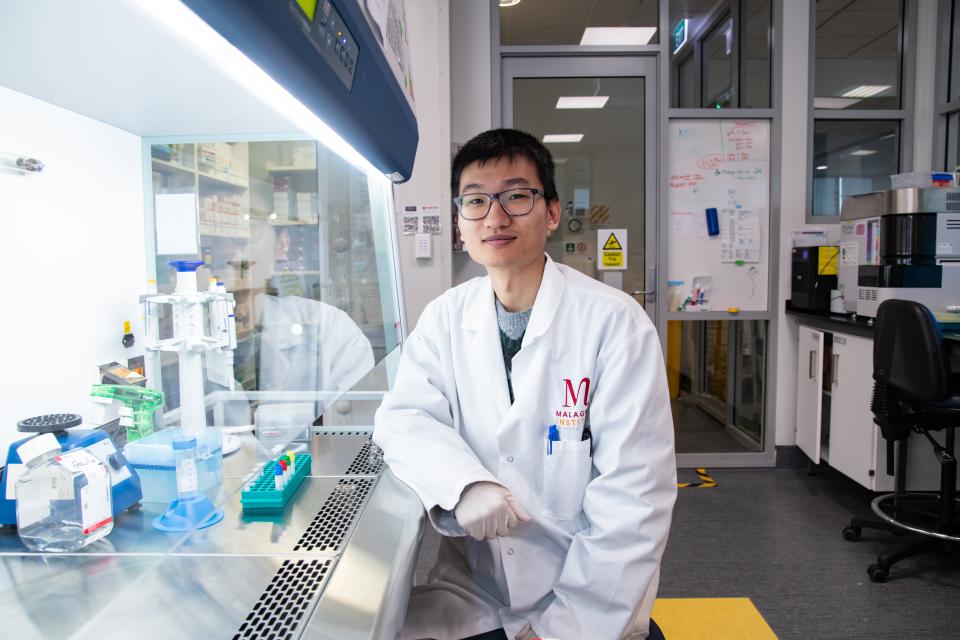
Related articles

Cancer: Same name, different diseases
23 September 2026

Clinical study to uncover the origins of a severe type of Crohn’s disease
26 August 2026

Malaghan visiting researcher: Dr Lauren Holz
28 July 2026

Malaghan Institute to collaborate with IARC/WHO to reduce global burden of stomach cancer
24 July 2026

The changing face of allergy treatment
24 June 2026

Breakthrough Malaghan and University of Auckland cancer research advances into new biotech venture
16 June 2026