
25 November 2026
Dr Manon Chauvin once dreamed of becoming a doctor, helping people get well. Today, in the Linterman Lab at the Malaghan Institute, she has found a different way to pursue that purpose – investigating why our immune defences weaken with age, and how vaccines could better protect older people.
As a teenager in the suburbs of Paris, Manon Chauvin made a short YouTube video. It was a montage of footage she had found online of New Zealand's green hills and rugged coastlines. She had posters of the country on her bedroom wall, and on her windowsill sat a kiwi soft toy in an All Blacks shirt, holding a rugby ball – a small symbol of her love for New Zealand. At the time, it felt a world away, a dream for some distant day, not somewhere she imagined she would actually live.
Her ambition to become a doctor was much more immediate. It started with people. Even as a child, Manon was curious about human behaviour and tuned in to everyone around her. “From a young age, I found a sense of purpose in helping others and seeing the people around me doing well,” she says. She was drawn to the idea of finding what was wrong and making it better.
Infectious diseases such as the flu take an enormous toll every year,” she says. “Behind those numbers are real people, families and loved ones. Finding ways to make vaccines work better for older people is one way to help protect them.
Manon’s route into research was not a straight line. After two years of medical school in France, she signed up for a diploma in laboratory techniques, to put everything she had learned to use. She stepped into the lab and was hooked.
“That is when I discovered what it means to be a researcher,” she says. “I loved working in the lab, but I wanted to understand more. Not just how to carry out experiments, but the questions behind them and the discoveries they might lead to.” So she kept studying.
A master’s degree followed, and Manon chose the biology of ageing. “Ageing is something we all go through, yet there is still so much we do not understand about it,” she says. “I found it fascinating to learn how it changes every fundamental system in our body, including our immunity.”
She went on to complete a PhD in immunology at Sorbonne Université in Paris, under the supervision of Dr Delphine Sauce. Manon says she owes a great deal to her PhD supervisor.
“I feel incredibly fortunate to have started my scientific career under her mentorship. She has helped shape who I am today and continues to inspire me, both as a scientist and as a person.”
The more Manon learned about the immune system, the more captivated she became, both by how it protects us every day and by what happens to it as we grow older.
Most of us only notice our immune system when something goes wrong. A runny nose, a tired afternoon, and we carry on, with no idea of the extraordinary work going on beneath the surface.
“What fascinates me about the immune system is that, without us even realising it, countless cells are constantly communicating and working together to protect us,” Manon says. Every moment, specialised cells are on patrol, recognising invaders and building antibodies tailored to almost any virus or bacterium they meet.
However, like every other system in the body, it grows old. “Ageing touches every compartment of the immune system,” Manon explains.
Scientists describe two changes that can result from ageing.
The first is immunosenescence. As we age, so do our immune cells. Some lose their function, others become less able to proliferate. With fewer working cells, the body struggles to mount a strong defense against a threat.
The second is inflammaging. A healthy immune system balances the molecules that sound the alarm with molecules that act as the brakes, calming things down. With age, that balance tips, and the body drifts into a state of constant, low-level inflammation, like a smoke alarm that never quite stops beeping. Everything is switched on and in overdrive, which makes it harder for the immune system to respond successfully when it needs to.
The consequences show up with vaccines. A flu vaccine works by showing the immune system a harmless piece of the virus, so the body is ready when the real threat arrives. In younger people, it works well but in older people, the response can be less effective due to inflammaging and immunosenescence. That matters, because the flu that results in a young, healthy person having a miserable week can be the start of a serious decline for an older person who is already frail. The people who need the vaccine the most can end up benefiting the least from it.
After finishing her PhD, Manon looked for a postdoctoral position in Europe, not wanting to go too far from home. Instead, the opportunity came from the farthest place on the map, and the country she had dreamed of since she was a girl.

Manon's childhood kiwi soft toy
She arrived at the Malaghan Institute in Wellington in March this year to join Dr Michelle Linterman’s lab – a new group investigating how different cell types collaborate to generate robust protective immune responses throughout the lifespan.
The lab’s research focuses on a place most of us have never heard of: the germinal centre. Think of it as a training ground inside the lymph nodes, where the body chooses its best defenders. After a vaccination, immune cells called B-cells are shown a piece of the virus. Helper cells, known as T follicular helper cells, check how well each B-cell detects it and send signals telling the best performing cells to multiply. These B-cells go on to produce the antibodies that protect us.
In older people, that conversation between cells appears to break down. Some signals are missing or weaker, and the training ground produces fewer top performers.
Manon is studying how cells in the germinal centre communicate after a vaccine, and what changes when the immune system ages. Which communication links are broken? Which signals have gone quiet? Can they be restored? The answers could help improve flu vaccine so that older immune systems can build the same level of protection that younger ones do naturally.
In pursuing those questions, Manon has had access to technology she describes as world class. The Hugh Green Cytometry Centre at the Malaghan Institute is home to instruments that examine cells one by one, telling them apart and revealing what each is doing.
“The quality of the cytometry platform here is really impressive,” she says, and she is just as enthusiastic about the institute’s vaccine and microscopy platforms.
As a student in Paris, Manon developed a broad range of skills, from designing and conducting her own experiments to learning how to troubleshoot laboratory equipment.
“My PhD taught me a great deal about independence and problem-solving in research. Here at the Malaghan, I am particularly grateful for the expertise and dedication of the teams who work behind the scenes to support our research”, she says.
Alongside her research, Manon also develops digital tools to make everyday tasks easier for scientists. She has built a website with resources to help researchers analyse data, plan experiments and navigate common challenges in the lab.
“I enjoy identifying problems in our everyday work and finding practical solutions to them. Being able to share something I have developed and knowing that it could make another scientist’s work a little easier is incredibly rewarding to me.”
Outside the lab, Manon loves being in the outdoors, and photographing the landscapes around her. Now that the country she once knew through videos online and bedroom posters is right on her doorstep, she has finished a project she began as a young girl. Her short YouTube montage of New Zealand was stitched together using online clips of a country she had never seen. Now, Manon has taken to the skies with a drone, capturing New Zealand’s landscapes herself, making a new video, this time featuring her very own footage.
While Manon is making memories on the other side of the world, her research is helping make sure the rest of us can keep making ours.
“Infectious diseases such as the flu take an enormous toll every year,” she says. “Behind those numbers are real people, families and loved ones. Finding ways to make vaccines work better for older people is one way to help protect them.
“Ageing is the one journey we all share. We see it in our grandparents, in our parents and, in ourselves. Understanding how the immune system ages, and how to help it perform best, is about more than avoiding a bad flu season. It is about staying well enough to keep exploring, and to continue making memories with our loved ones for as long as we can.”
Support our life-saving research.
Donate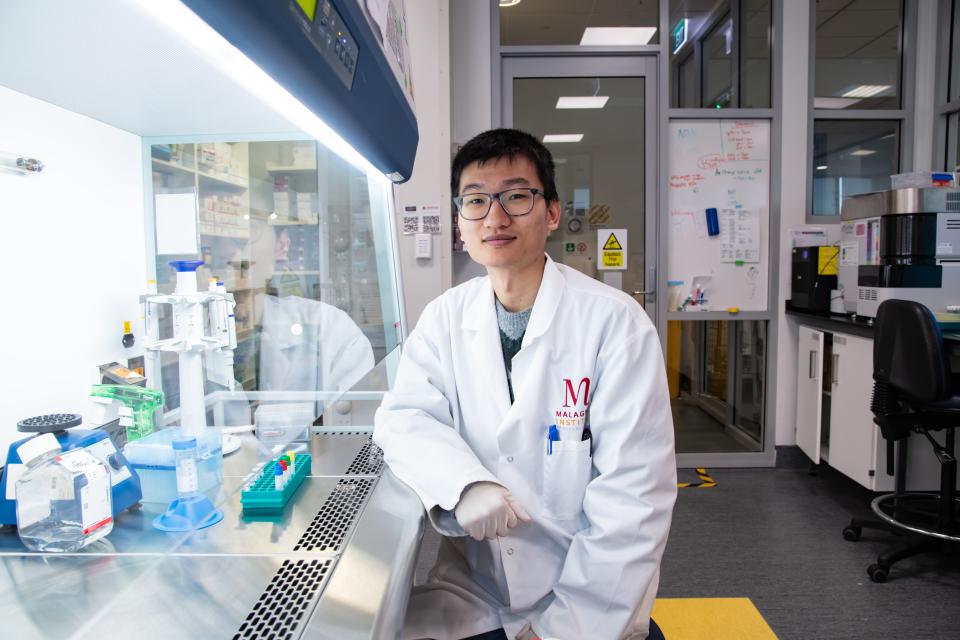
Related articles

New research to help vaccines work better as we age
8 October 2026

Research offers new approach to vaccine design for broader immunity
27 August 2026

National RNA Development Platform hits milestone with 500 products made for human, plant and animal health research
16 April 2026

NZ-UK research deepens understanding of germinal centres for better vaccine design
27 January 2026

How a quirk of the immune system may play a big role in protecting us from disease
18 December 2025

The nose knows: new research explores next generation of nasal vaccines
2 December 2025