
27 August 2026
New research by the Malaghan’s Connor Laboratory, published in the prestigious PNAS journal, shows how directing the immune system towards conserved areas of the Covid virus and its many variants, using RNA technology, could be a significant step towards designing broad-spectrum vaccines.

The Connor Lab.
The strength of vaccines in fighting infections is that an antigen can be presented to the immune system to create highly specific protection. But that specificity can be a double-edged sword. While strong protective immunity can be generated from a single antigen, the protection is only effective as long as that antigen doesn’t change – a problem for rapidly mutating viruses like Covid or influenza.
Viruses are incredibly adept at mutating and altering their structure to evade detection by the immune system – a process known as antigenic drift. The current solution is to design new vaccines each year to keep up. While effective, it comes at a significant cost and requires populations to be regularly vaccinated to maintain widespread immunity and prevent outbreaks and pandemics.

Dr Isabelle Montgomerie
“Like many viruses, SARS-CoV-2 – the Covid virus – changes frequently with multiple different circulating strains globally,” says Dr Isabelle Montgomerie, a postdoctoral researcher in the Connor Lab. “The virus will mutate away from antibodies that people commonly make, something called immune evasion.”
Not all parts of a virus can change so liberally, though – some are ‘conserved’ and cannot mutate without loss of function. Dr Montgomerie says these parts are great to target because antibodies against them are very powerful and could provide protection against future variants.
The challenge is that the immune system doesn’t typically look for these areas to respond to.
In a natural infection, many different kinds of antibodies are generated by B-cells as the immune system figures out which antibody works best. Included in this process are broadly neutralising antibodies – antibodies that can recognise conserved areas – but they account for a very small percentage of the total antibodies made, too few to have much protective effect on their own.
Dr Lisa Connor wants to turn this on its head. “Our aim with this work is to amplify these rare antibodies, and the B-cells that make them, so they represent a greater proportion of the total antibody response.”
The Connor Lab used RNA technology to ‘fuse’ multiple variants of the Covid virus (both current and historic strains no longer circulating) to create what’s known as a divergent vaccine, and present it to the immune system in preclinical studies.
By combining multiple variants, they found that the immune system was better able to recognise antigens the different strains had in common – in other words, the ‘conserved’ regions.
By boosting the presence of broadly-neutralising B-cells via divergent vaccines, we believe these next-generation vaccines could offer protection from rapidly evolving viruses like Covid.
“Rather than just combining two separate vaccines into a single shot, we found that a divergent vaccine produced more broadly-neutralising B-cells,” says Dr Montgomerie.
Currently, vaccines for seasonal viruses like the flu combine several components in a single dose – for each of the main strains circulating in the population. This is known as a multivalent vaccine. However, this only produces separate populations of B-cells, each recognising just one strain, rather than B-cells that respond to the features shared across strains.
“You still end up producing immune responses that only recognise single antigens for the specific variants within the multivalent vaccine. The problem of antigenic drift hasn’t changed,” she says.
By combining multiple antigens within a divergent vaccine, you boost populations of B-cells that can recognise the conserved areas of multiple variants. This is important for fighting infections as not every seasonal vaccine can account for all the variants or sub-variants of a virus that may arise.
“By boosting the presence of broadly-neutralising B-cells via divergent vaccines, we believe these next-generation vaccines could offer protection from rapidly evolving viruses like Covid,” says Dr Montgomerie.
Turning to what made the research possible, Dr Connor says her lab wanted to stop leaving broadly protective immunity to chance, and instead design a vaccine that deliberately steers the immune system towards the conserved parts of the virus.
“RNA technology made that possible. It’s flexible enough that we could design and test far more vaccine variations than would be feasible with protein or nanoparticle-based approached, and refine them quickly based on what each experiment told us.
“This collaborative work also builds on the work of Vaccine Alliance Aotearoa New Zealand, with many of the learnings influencing this research.”
For now, the Connor Lab is focused on better understanding how the immune system interacts with divergent vaccines, and whether they can apply this technology to other infectious diseases.
"The same rules we're uncovering could let us build a vaccine before the next pandemic arrives, one that targets the parts of a virus that can't change. For a rapidly evolving virus like influenza or SARS-CoV-2, that could give us enough immunity to slow a new strain down and buy time while a more targeted vaccine is developed.”
You can view the paper here.
Support our life-saving research.
Donate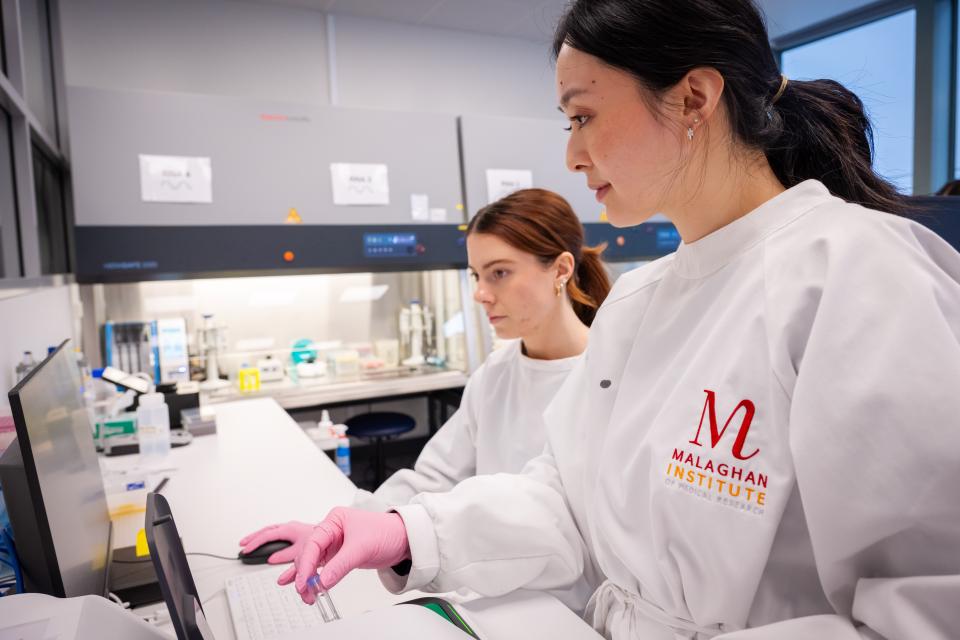
Related articles

Our Changing World: Building New Zealand’s RNA capabilities
9 June 2026

Building the RNA Development Platform, one RNA at a time
27 May 2026

The evolution of one of humanity's oldest immunotherapies
27 May 2026

Researchers explore 'RENTAL CAR' approach to CAR T-cell therapy
21 May 2026

National RNA Development Platform hits milestone with 500 products made for human, plant and animal health research
16 April 2026

NZ-UK research deepens understanding of germinal centres for better vaccine design
27 January 2026