
27 May 2026
When Dr Rebecca McKenzie joined the Malaghan Institute in 2022, it was to assist with the development of a New Zealand-made Covid vaccine. Today, she sits at the beating heart of mRNA research and development in New Zealand.
Rebecca is one of the Malaghan’s RNA technology experts. She is also a quality control pillar lead in the New Zealand RNA Development Platform. Co-hosted by Victoria University of Wellington and the University of Auckland, with the Malaghan Institute of Medical Research and the University of Otago as partners, the platform is supercharging New Zealand’s capability in RNA technology.
With the goal of building end-to-end research and manufacturing capability for mRNA vaccines and therapeutic products within New Zealand, the platform’s day-to-day work includes producing RNA for clinical and commercial research across the New Zealand health and biotech sector, something Rebecca has had a hand in from the very beginning.
The potential of RNA technology
Beyond Covid, RNA technology presents a significant opportunity for New Zealand to supercharge its biotech sector, become a leader in the development of novel RNA therapeutics and provide vaccine security in the face of future pandemics.
RNA stands for ribonucleic acid. It’s a type of genetic material, which can act as a molecular messenger (mRNA) that translates information held in DNA into specific proteins. These proteins then go on to perform a specific function, such as recreating sections of a virus and presenting them to the immune system to recognise.
RNA can be synthesised quickly and efficiently in the lab – and as long as scientists know the genetic sequence for the protein or proteins of interest, the therapeutic possibilities are endless. For example, RNA is being used to encode for proteins found on cancer cells, with the goal of vaccinating a person’s immune system to their cancer.
“My colleague Dr Olivia Burn is exploring this technology for liver cancer,” says Rebecca. “While it’s still early work, a liver cancer vaccine could dramatically change patient outcomes in the future for a cancer type with very few current treatment options.”
The versatility of RNA comes down to its many forms, long (messenger RNA) and short (non-coding RNAs). Long mRNA is the kind used in vaccine research and development – it can encode for multiple protein signatures of a target virus or bacteria, prompting precise, targeted immune responses.
Because the manufacturing of these proteins is done within a cell rather than in a lab, the result is often more accurate and closer to the actual target – resulting in better responses.
Short or 'micro' RNA works differently: rather than instructing cells to make a protein, it directly manipulates gene expression.
“This is really exciting stuff our collaborators at the Ferrier Research Institute are working on. We can send short strands of RNA into cells that are highly-targeted to interfere with the expression of specific genes – essentially controlling which genes are turned on or off – without permanently modifying them.”
It is this flexibility of RNA that Rebecca finds particularly exciting, making RNA such a powerful technology for the future of personalised medicine.
The foundations of a national platform
Thanks to significant donor funding during the pandemic, and capability developed as part of Vaccine Alliance Aotearoa New Zealand (VAANZ), the Malaghan Institute was able to build New Zealand’s first end-to-end preclinical RNA therapeutics platform. Government investment in a national platform in 2023 further advanced this revolutionary field in New Zealand – expanding its potential well beyond Covid vaccines.
“Ever since I started at the Malaghan I’ve been involved in helping build capability to bring RNA vaccine technology to the Malaghan and New Zealand,” says Rebecca. “Initially this was as part of the Vaccine Alliance Aotearoa New Zealand – I returned home from completing my PhD in Molecular Biology in the Netherlands just as the first RNA versions of VAANZ’s Covid vaccine were being made and tested.
“At the time it was just me full time, with support from the team, designing and producing the RNA for testing as part of the Malaghan’s Hugh Green Technology Centre. The molecular biology cores focus was the pipeline to capture single cells for RNA sequencing, with my role a bit of a catch all for those at the Malaghan in need of support for their molecular work.
Rebecca explains that in molecular biology, having the right methodologies and quality control steps in place is essential for creating quality research materials – RNA or otherwise. Without the correct measures in place, you risk ending up with too little, or too poor-quality RNA to be useful – in experiments, let alone in clinical trials.
With the national RNA Development Platform starting to find its feet following government investment, 2024 represented a year of growth for the platform and for Rebecca.
Appointed as one of seven pillar leads established to cover the processes involved in researching, testing and implementing RNA technologies, Rebecca was put in charge of quality control.
She also hired her first team member to expand the production of RNA for research.
“We really hit the ground running. Having a dedicated RNA production person meant we could start supplying RNA for projects and refining our processes. This gave me more time to focus on the bigger picture and coordinating a concerted effort to further develop our methods for production, assessment and quality control of RNA.”
The platform soon funded fast-start projects intended to build national capability in RNA technology, ranging from creating vaccines to combat staph infections to investigating next generation self-amplifying RNA technology.
As demand for RNA grew from researchers across the country, Rebecca’s team of two became a team of four.
“Making RNA is a three-step process involving design, production and encapsulation. The team rotates through multiple constructs a week, with it taking about three days to make each new construct.”
Rebecca says that day to day she wears two hats. “Both my production lead hat juggling the requests, managing the team, development and evolving methodology of RNA production.
“At the same time I work closely the wider RNA team to evolve our quality control methods and transfer these to our industry partners for GMP production.”
The platform recently hit a major milestone – producing 500 RNA products for research projects across New Zealand and overseas, encompassing cancer and infectious disease to animal and plant health.
Beyond 500
“RNA technology is revolutionising medicine and agriculture – and we are at the forefront of that transformation,” says Rebecca. “After two years of purposefully building our team, infrastructure and capabilities, we are leading RNA innovation in New Zealand and beyond.”
“Today, we offer researchers the capacity to produce high-quality RNA products, the agility to rapidly adopt cutting-edge technologies and methodologies, and are supporting scientific partnerships to take a bold idea all the way to a breakthrough product.”
Rebecca and the team are invigorated by the intense interest in this revolutionary technology both nationally and internationally – and at the Malaghan.
“The various research groups at Malaghan are some of the platforms biggest customers and supporters. They keep the team very busy but also offer a broad network of on-site users with direct experience of our products.
“This is so important to evolving our technology. It gives us real time feedback on what works, what isn’t working and also creates a community that is a real powerhouse. Each researcher is using our tech to tackle a different question and we see over time that many of these questions coalesce and need the same advances to our products. This feedback loop makes our role as a production facility exciting and fast paced.”
One project on the horizon is exploratory research into the application of RNA technology in future CAR T-cell therapies. Dubbed RENTAL CAR T-cells, this approach could extend CAR T-cell therapies beyond cancer to autoimmune diseases such as lupus, producing transient CAR T-cells that function for a limited time before naturally disappearing.
“It’s exciting to be on the cusp of something that has so much potential for health and disease prevention,” says Rebecca. “I believe its vitally important that New Zealand not only leverages RNA technology to help solve New Zealand-specific problems, but also contribute to the worldwide acceleration of RNA-based therapeutics, vaccines and disease prevention.”
Support our life-saving research.
Donate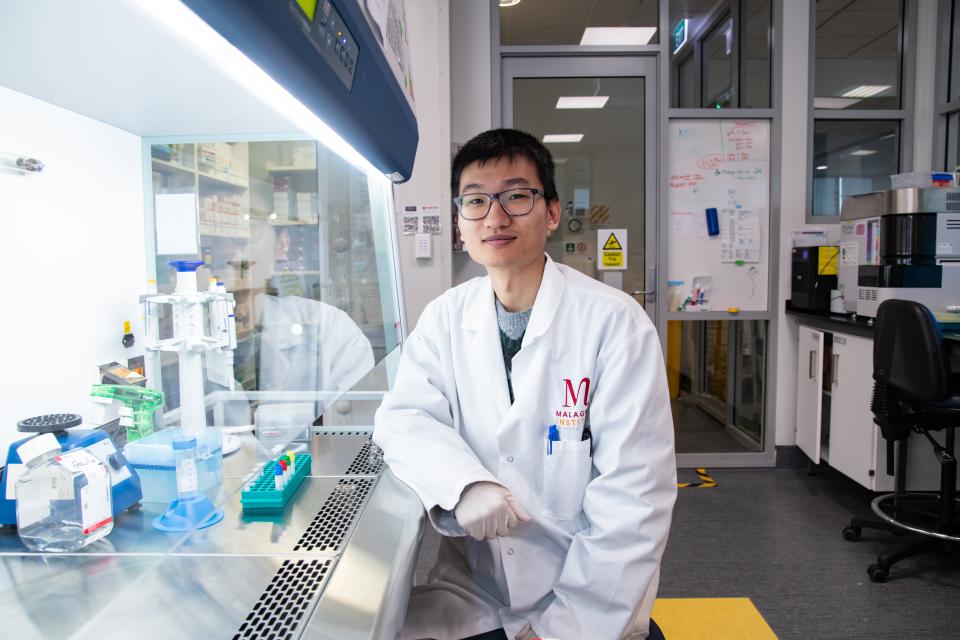
Related articles

Cancer: Same name, different diseases
23 September 2026

Research offers new approach to vaccine design for broader immunity
27 August 2026

Reading a tumour’s fingerprint for personalised immunotherapies
22 July 2026

The changing face of allergy treatment
24 June 2026

Our Changing World: Building New Zealand’s RNA capabilities
9 June 2026

The evolution of one of humanity's oldest immunotherapies
27 May 2026