
11 June 2026
The Malaghan’s CAR T-cell research team has received a Health Research Council of New Zealand project grant to enhance cancer-killing CAR T-cells by improving their metabolic ‘fitness’. The grant, worth $1.2 million over three years, aims to help these modified immune cells better perform in adverse environments caused by solid tumours – one of the current limitations of this ground-breaking therapy.
Dr David O'Sullivan
“Internationally, CAR T-cell therapies similar to the one being assessed in the Malaghan’s ENABLE-2 clinical trial are revolutionising cancer therapy by training a patient’s own immune system, specifically their T-cells, to hunt and kill cancer cells.”
While several CAR T-cell therapies are in routine use overseas for the treatment of certain blood cancers, the therapy has yet to break significant clinical ground for the treatment of solid tumours.
“Although successful in treating blood cancers, the full potential of these therapies for solid cancers is yet to be achieved,” explains Senior Research Fellow Dr David O’Sullivan who is leading the project, alongside Professor Robert Weinkove, Dr Rachel Perret, Dr Olivier Lamiable and Dr Nathaniel Dasyam. “As ‘living drugs’ CAR T-cells are vulnerable to immune suppression caused by tumours which can impair their cancer-killing activity.”
Solid tumours are particularly efficient at suppressing the immune system and use a number of perverse strategies – like nutrient depletion – to stymie the effectiveness of immunotherapies like CAR T-cell therapy. In such challenging environments, CAR T-cells can become exhausted and unable to reach the deepest parts of the tumour needed to completely eradicate the disease.
As humans, the fitter we are, the less we tire performing a challenging task. T-cells behave in a similar way – something Dr O’Sullivan hopes to exploit when designing future CAR T-cell therapies.
“For T-cells to infiltrate tumours and kill cancer cells effectively they need to be at optimal metabolic fitness,” says Dr O’Sullivan. “From previous research we know that mitochondria, the power house of the cells, are key to supporting the energy needs of T-cells when they are targeting cancers.
“What we are aiming to achieve with CAR T-cells is a bit like what an athlete does to train for a big event. Through targeted exercises and a healthy diet, an athlete builds up stamina and strength. We want to give our CAR T-cells the same treatment.”
By tailoring the culture conditions and supplements used during the manufacture of CAR T-cells in the lab, the team aims to increase the mitochondrial mass per cell, meaning the CAR T-cells have more gas in the tank to carry out their important task – killing cancer cells – when reintroduced to the body.
“We know that enhancing mitochondrial metabolism can not only enhance infiltration of T-cells into tumours, but also once the T-cells are directly interacting with cancer cells it can help them produce cytotoxic molecules that assist in killing the tumour cells.”
Enhancing CAR T-cells with optimum metabolic conditioning means they should be better equipped to perform in challenging tumour microenvironments.
“Improving T-cell fitness can also help with making them less susceptible to adverse tumour conditions as it provides a bit more metabolic flexibility which is beneficial in nutrient depleted environments,” says Dr O’Sullivan.
“Through this process we can enhance CAR T-cell function and resilience as they enter a tumour and kill cancer cells. This approach could be a simple and low-cost way to increase the effectiveness of CAR T-cell therapy for a broader range of cancer types.”
“Future generations of CAR T-cell therapy will involve reprogramming T-cell biology, to armour CAR T-cells against the harsh conditions found within solid tumours,” says Clinical Director Prof Weinkove. “Should Dr O’Sullivan’s research find new ways to achieve this, our proven track record of taking laboratory discoveries into New Zealand clinical trials puts us in a strong position to advance his concept."
Support our life-saving research.
Donate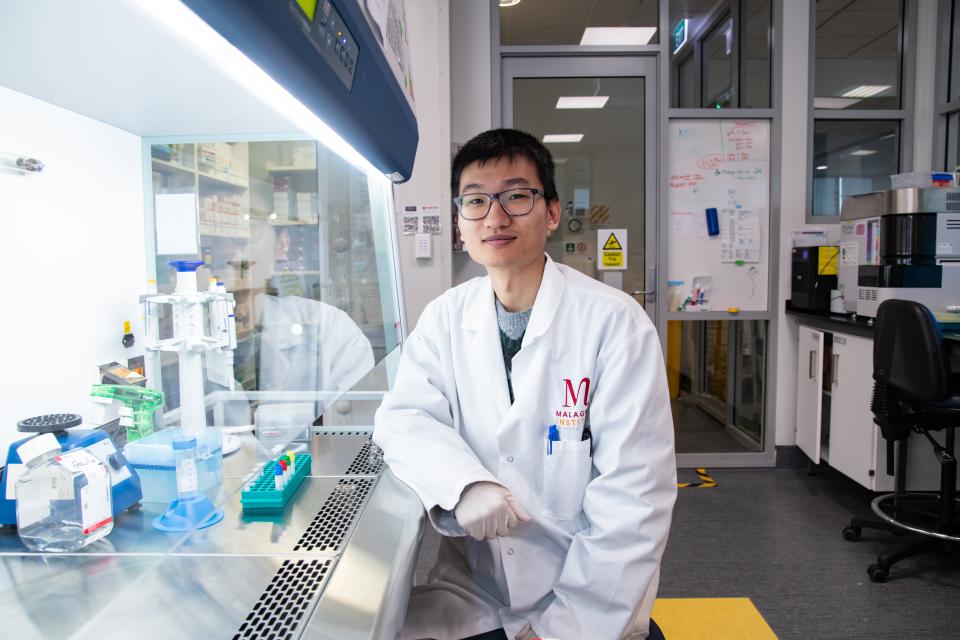
Related articles

Cancer: Same name, different diseases
23 September 2026

Malaghan Institute to collaborate with IARC/WHO to reduce global burden of stomach cancer
24 July 2026

Reading a tumour’s fingerprint for personalised immunotherapies
22 July 2026

Breakthrough Malaghan and University of Auckland cancer research advances into new biotech venture
16 June 2026

What's next for CAR T-cell therapy
27 May 2026

Researchers explore 'RENTAL CAR' approach to CAR T-cell therapy
21 May 2026