
27 May 2026
Every day we breathe in thousands of fungal spores – microscopic particles smaller even than pollen. Because of their diminutive size, these spores can penetrate deeply into the furthest reaches of our lungs where they settle until our immune system can deal with them. But how does our immune system cope with such a constant presence of foreign particles? And how do these spores affect our wider health? These are some of the questions driving the Hilligan Lab’s research.

The Hilligan Lab, clockwise from left, Rebecca Palmer, Melanie Prout, Caitlin Dorset, Casper Rifkov, Kit Moloney-Geany and Dr Kerry Hilligan
“We work with a fungus called Aspergillus, one of the most ubiquitous classes of fungi present in almost every environment,” says Dr Kerry Hilligan. “The interaction of these microscopic spores and the cells that line the lungs has huge implications for both health and disease.”
Dr Hilligan and her team want to better understand how these interactions shape immunity – where it is maintained or strengthened, or where this relationship causes disease – and what this could mean for futuretreatments.
Immune protection
One of the Hilligan Lab’s projects is looking at how the presence of Aspergillus spores may protect us from life-threatening infections like the flu.
“Early exposure to common microbes like fungi can be important to train the immune system to respond more effectively when it encounters serious infections like flu or COVID-19,” says Dr Hilligan.
In preclinical studies, the lab found that prior exposure to fungi resulted in increased survival when challenged with a flu infection.
“We want to know what’s causing this broader protection.”
PhD student Caitlin Dorset is following this interaction closely in her research, looking at what happens in the first few hours after flu infection, and how the immune system eventually restores balance – in the presence or absence of prior fungal exposure.
“We’d obviously like to get to a point where we’re not relying on one infection to protect us from another,” says Dr Hilligan. “But by understanding how fungal exposure promotes this journey from viral infection to recovery and tissue repair, Caitlin’s work is revealing the kinds of molecules that might act as natural regulators of the immune system.
“These could form the basis of new therapies that protect our lungs against damage during viral infection. While we haven’t yet found a smoking gun, we’re getting close.”
Driving asthma
For most people, Aspergillus spores enter the lungs and are eventually cleared without fanfare. But for some people, the presence of these fungi can be a persistent irritant and a driving force for fungi-derived allergic asthma – one of the more severe forms of the disease and poorly understood.
This is another line of investigation for the Hilligan Lab, who are looking into the cellular steps that drive the allergic response, and whether the process can be stopped.
“In cases where the immune system is responding inappropriately to something in the lung, we see asthma. We believe this is particularly relevant for fungi because they penetrate so deeply into the lung that when the immune system overreacts, it causes extensive irritation and damage, exacerbating symptoms.”
Like all inappropriate immune reactions, asthma and allergies are caused by the wrong parts of the immune system being stimulated.
“For fungal clearance, the immune system uses what’s called the Th17 response. However, in the case of asthma, we’re seeing a different arm stimulated as well, the Th2 response. This is what’s driving those allergic symptoms.”
Melanie Prout, a senior research officer in Dr Hilligan’s team, has been studying Th2 responses in the skin and lung for over 20 years. She is now lending her expertise to fungal-induced asthma to pinpoint the specific cell types in the lung that trigger the allergic cascade.
Alongside Melanie, PhD student Rebecca Palmer is working to understand why and how the wrong part of the immune system is being recruited to fight off these fungi and identify strategies to get the immune response back in balance.
“As an immunologist, getting to look at the fundamental building blocks of the immune system is really fascinating. We have all these different cell types lined up like dominoes and we’re trying to understandwhich cell’s involved in which order. If we can find that first domino and stop it from falling we have a real shot at preventing these kinds of diseases from occurring,” says Rebecca.
When Aspergillus takes hold
In rare cases, instead of lying dormant in the lung, Aspergillus finds the right conditions to germinate and start growing filaments. If these filaments can’t be cleared in time, it can spell disaster.
“For people who are immune-compromised or with certain pre-existing conditions, it’s a life-threatening infection, with about a 40 percent mortality rate,” says Dr Hilligan. “The fungi are too deep in the lung to easily clear and antifungal drugs are not only toxic to the body, but they’re also not very effective in the absence of a well-functioning immune system.”
Dr Hilligan has been working with Dr Johanne Jacobsen from the University of Oslo’s Institute of Immunology, who has been designing novel therapeutic antibodies to more effectively clear Aspergillus infection.
“It’s a project we’re excited to dive into,” says Dr Hilligan. “With environmental fungal loads increasing due to climate change, and more people than ever susceptible to fungal infections, it’s vital that the scientific community respond to the WHO's call for new strategies to combat fungal disease.”
Support our life-saving research.
Donate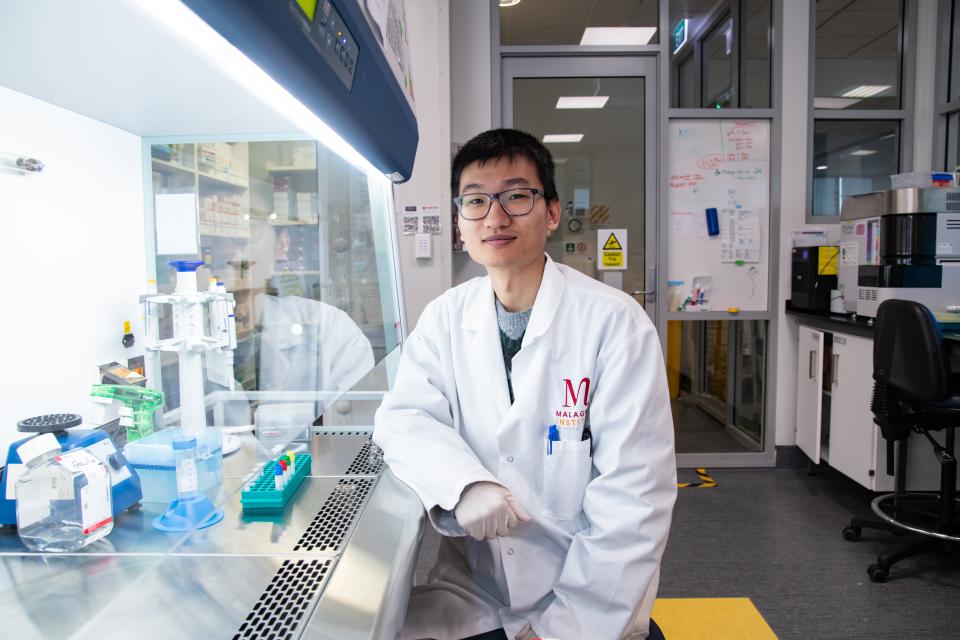
Related articles

The changing face of allergy treatment
24 June 2026

Dr Kerry Hilligan awarded Sir Charles Hercus Health Research Fellowship
2 December 2025

Marsden funding to drive discovery and innovation in cancer, allergy and infectious disease research
5 November 2025

Malaghan alumni series: Professor Paige Lacy
14 October 2025

Cancer, measles and allergic disease research funded in latest HRC grants round
19 August 2025

Tracking allergies to their source: new research offers insight into mechanisms priming the allergic response
2 July 2025